Manage Custom Actions
After creating a custom action, you can continue to manage it by organizing actions into groups, reordering them, enabling or disabling them, copying, renaming, deleting them, and configuring where they are available.
Action Groups
When a view contains many custom actions, you can organize them by grouping, reordering, searching, enabling, or disabling actions. This keeps the interface organized and makes it easier for application administrators to manage actions across different views.
Action groups are saved per view, so each view can have its own grouping and action order. Grouping for actions on the Record Details page and under Bulk Actions is configured separately.
Create an Action Group
Go to Configure View > Data Operation, click Add Group, then specify a group name and icon.
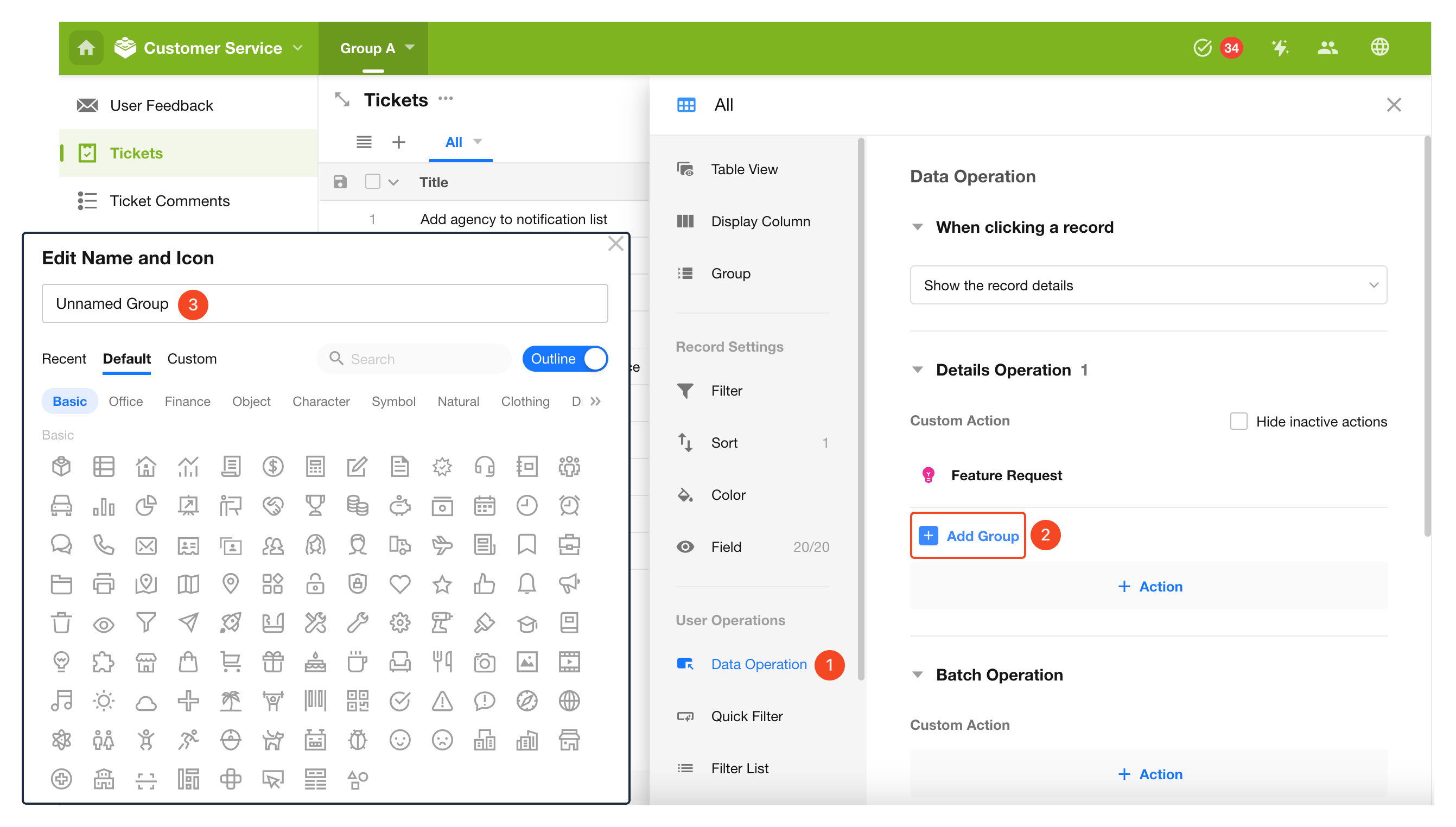
Move Actions Between Groups
Drag a custom action into the desired group, or drag it out of a group.
Group Display
After grouping, actions are displayed by group in the application. Empty groups are hidden automatically.
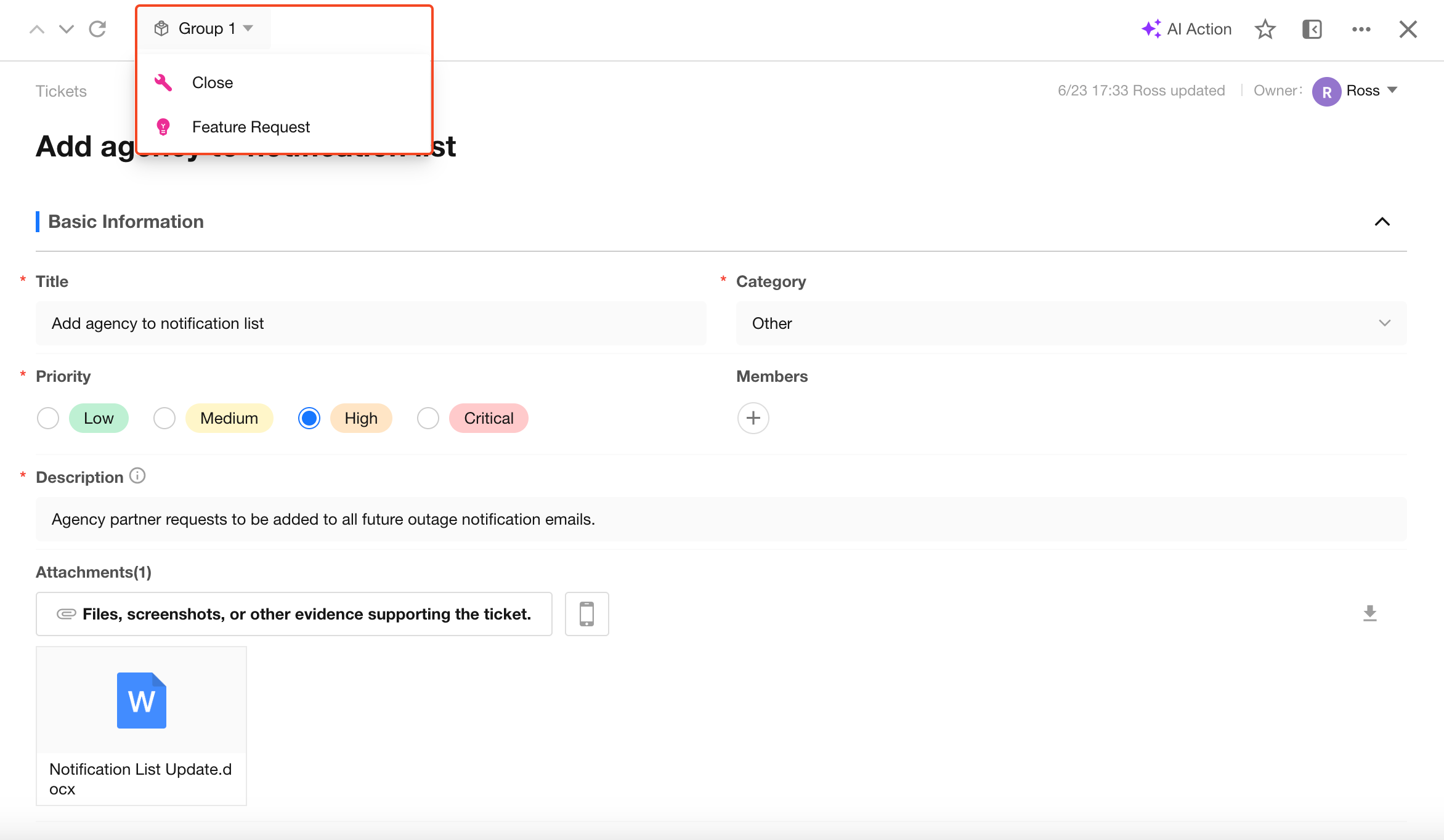
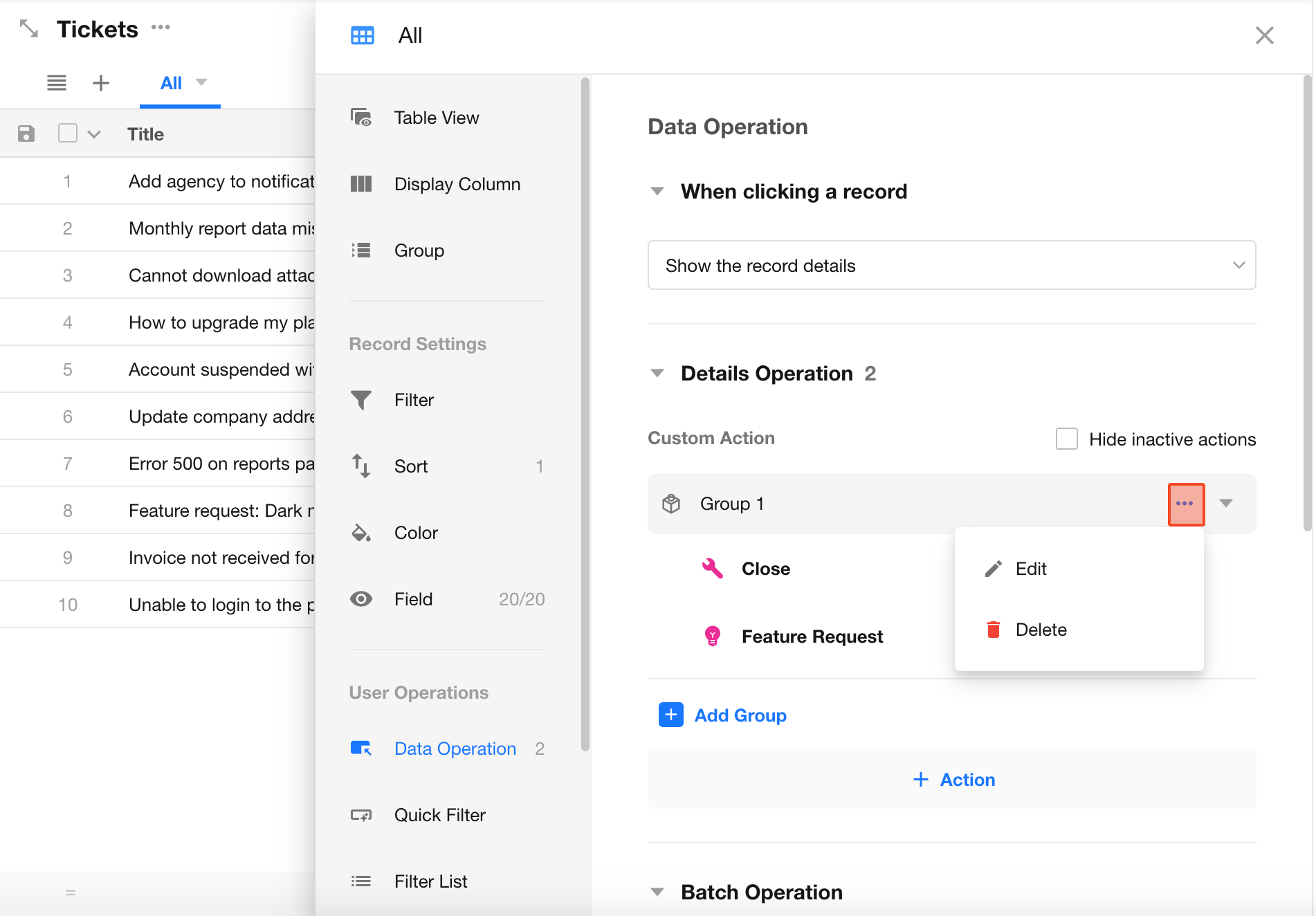
Manage Action Groups
You can drag and drop groups to reorder them or delete groups as needed. When a group is deleted, the actions it contains are moved to the end of the action list.
Manage Action Settings
Access Action Management
Custom actions can be managed from either the worksheet or a view.
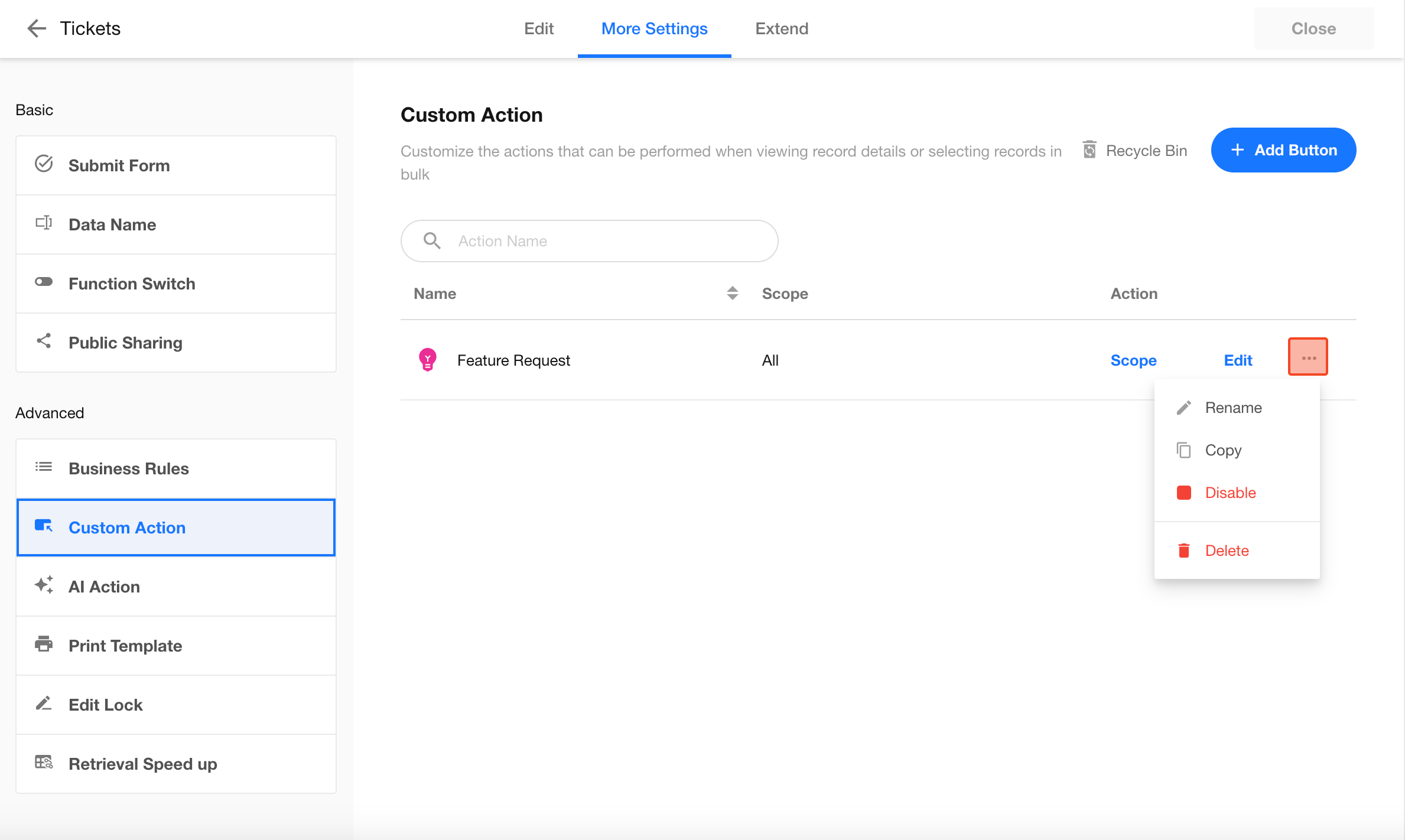
From the worksheet
Go to Edit Form > More Settings > Custom Action, then click the action menu.
From a view
Go to Configure View > Data Operation, then click the action menu.
From the action management page, you can copy, rename, edit, enable, disable, or delete actions.
Custom actions created in a view are available only in that view by default. They also appear in the worksheet-level action management page.
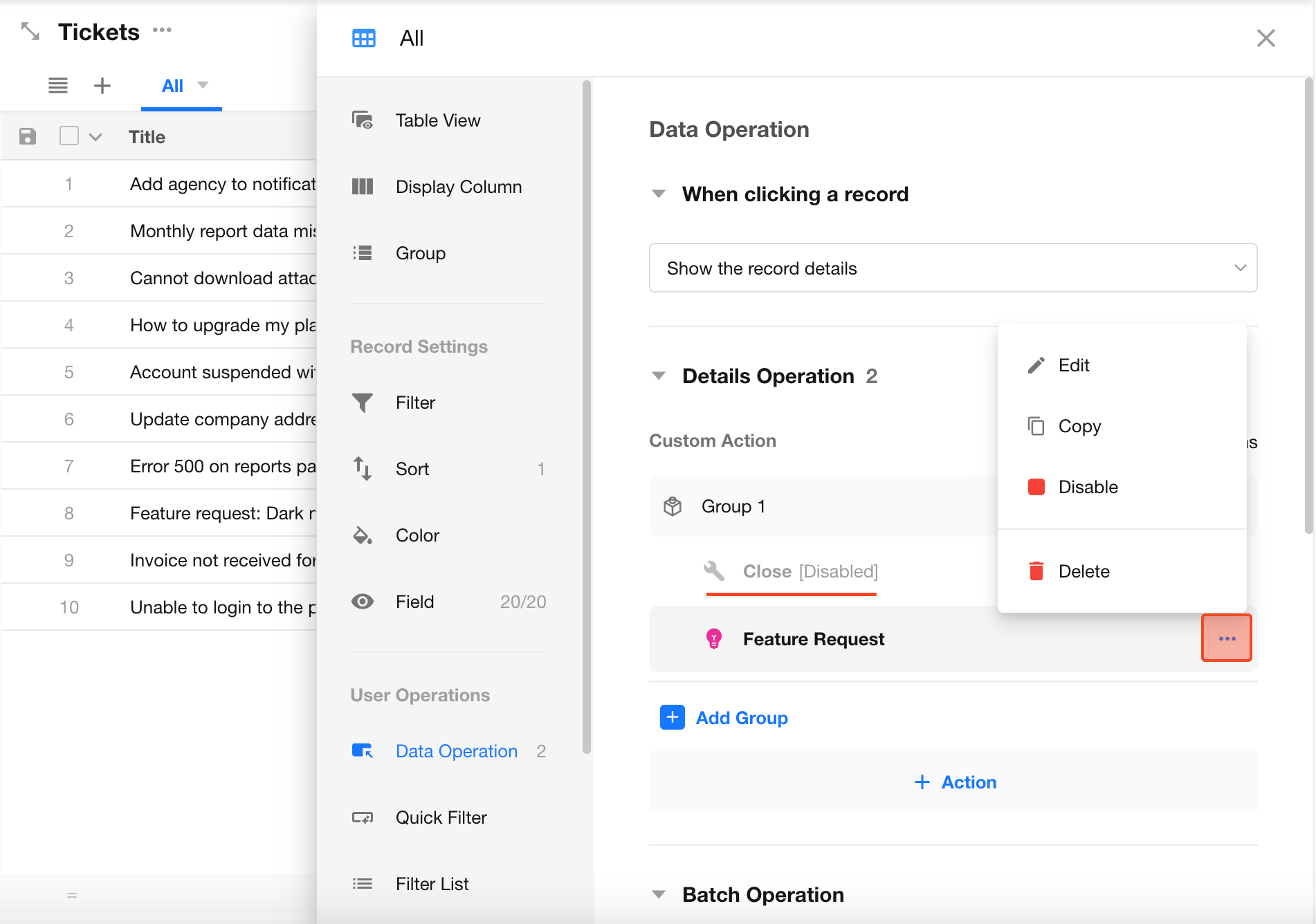
Copy an Action
Copying an action duplicates not only the button configuration, but also the workflow associated with the action.
Rename or Edit an Action
You can modify the action's name, description, icon, execution method, availability, and other settings. Changes affect how the action is displayed and used within its configured scope.
Enable or Disable an Action {#enable}s
Newly created actions are enabled by default.
- Enabled: The action is available to users.
- Disabled: The action is temporarily hidden from regular users.
When an action is disabled, application administrators can still see it in the view configuration, where it is marked as Disabled. Regular users cannot see or use the action in the application.
Delete an Action
- Actions deleted from a worksheet can be restored from the Recycle Bin.
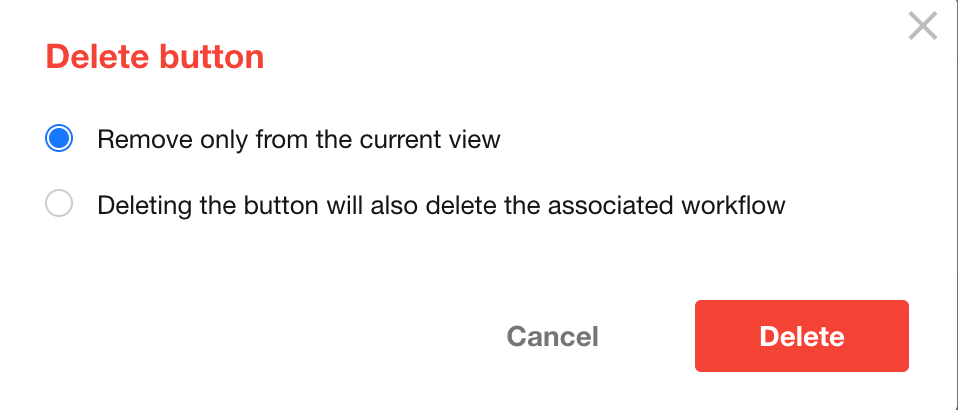
- When deleting an action from a view, you can choose how it should be removed.
When deleting an action from a view, the following options are available:
-
Remove from the current view only
If the action is also used in other views, it remains available there and is removed only from the current view.
-
Delete the action and its associated workflow
The action is removed from all views, and the associated workflow is deleted at the same time.
Reorder Actions
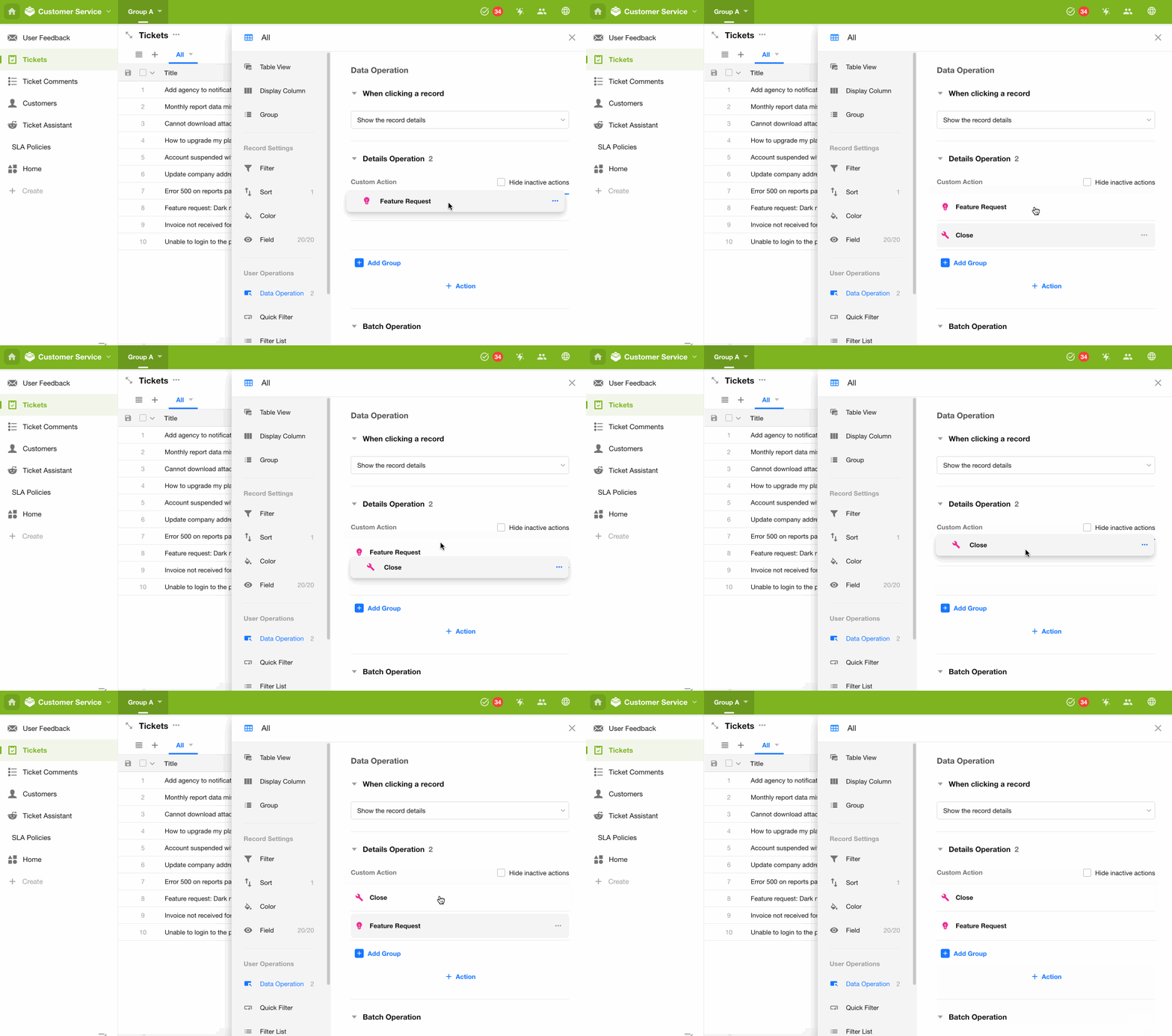
The importance and frequency of custom actions may vary between views. You can drag and drop actions within a view to adjust their display order.
Changes are saved immediately and take effect only in the current view.
Reordering actions is not supported from the worksheet-level Custom Actions management page, sorted by creation time.
Configure Action Availability
Action availability is configured at two levels:
- Specify which views the action is available in.
- For each applicable view, specify where the action is available.
Actions created at the worksheet level are available in all views of the worksheet by default. Actions created in a view are available only in that view by default.
To configure availability, open the worksheet-level action management page and click Scope for the desired action.

-
All Records
The action is available for all records in every view.
-
Specified View
The action is available only for records in the selected views.
Within each selected view, you can further specify where the action is available:
-
Record Details
Available when working with a single record, such as from the Record Details page or when only one record is selected in the list.
-
Batch Operations
Available when multiple records are selected in the list.
-
Was this document helpful?