Export and Import Applications
Application export packages an application's configuration and selected data into a .mdy file, which can then be imported into another organization to quickly duplicate, migrate, or upgrade an application.
This feature is available in paid editions of HAP SaaS and all editions of HAP Server.
Export an Application
Access the Export Page
-
Export a Single Application
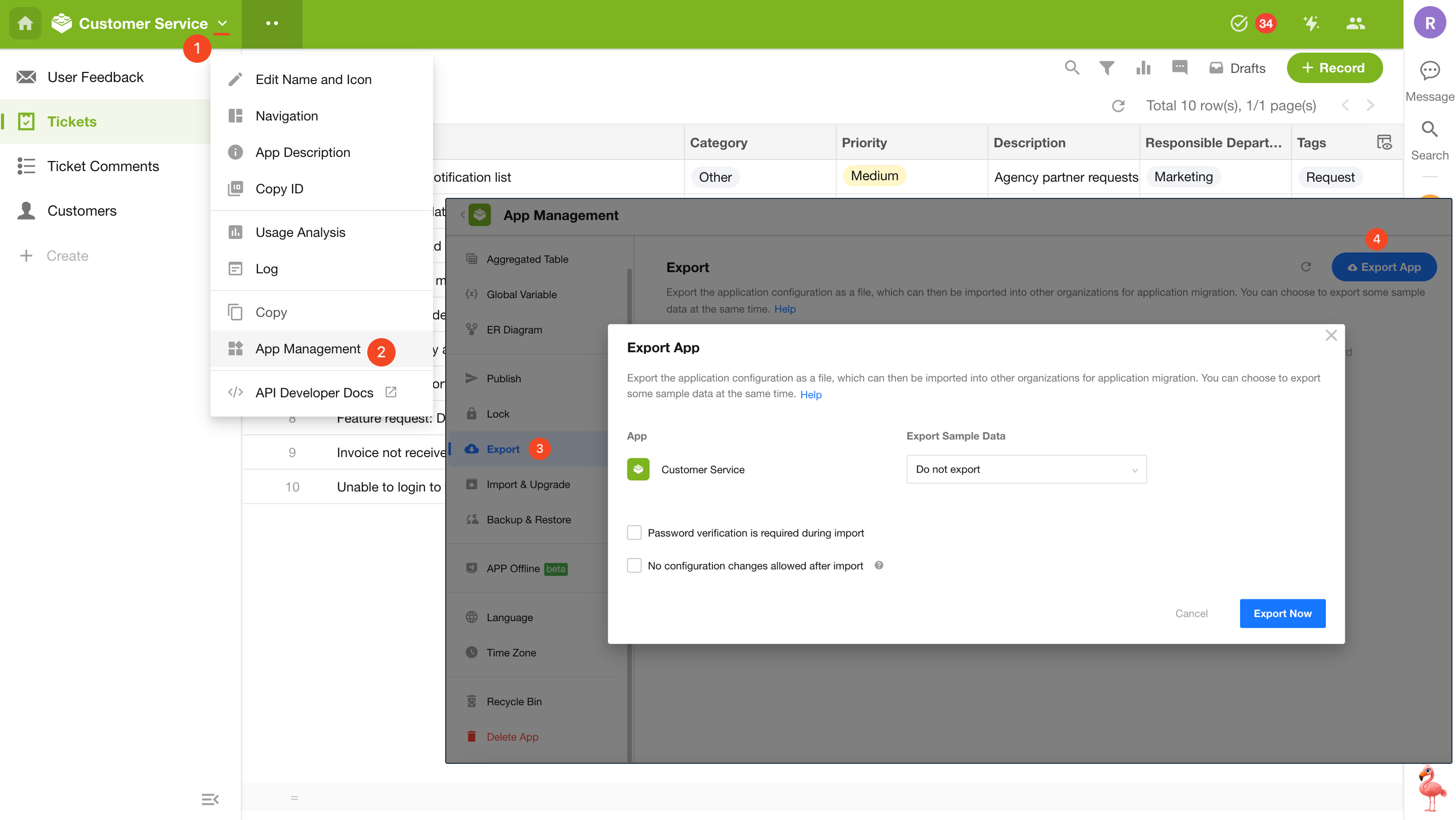
Path: As an application administrator, go to App Management > Export, then click Export App.
If a worksheet in the application contains relationship fields linked to worksheets in other applications, those relationship fields will be converted to text fields during export and the relationships will be removed. To preserve cross-application relationships, export the related applications together.
-
Export Multiple Applications
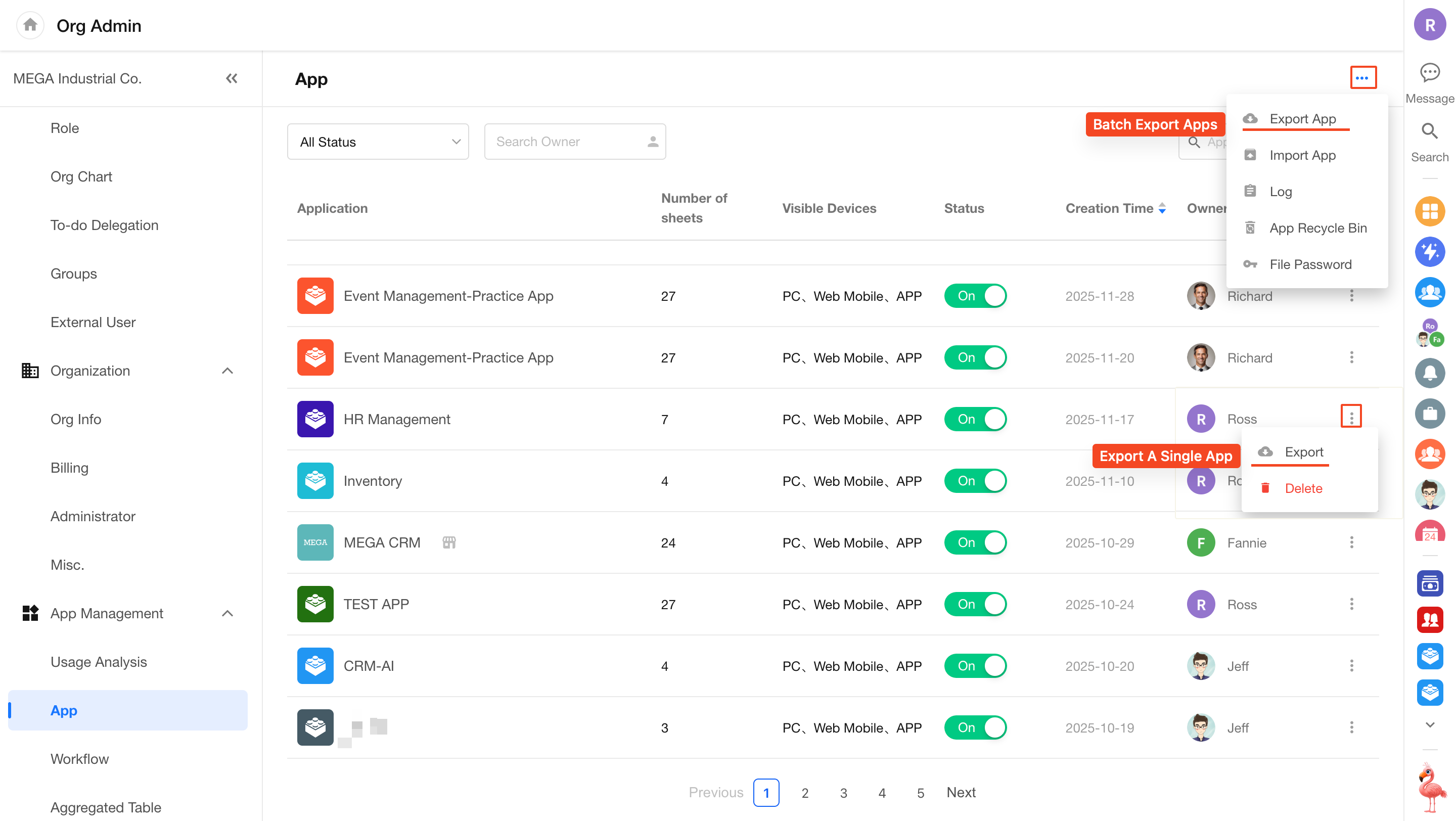
Path: As an organization administrator, go to the Organization Admin console, then navigate to App Management > App. Click the More menu in the upper-right corner and select Export App.
You can export up to 20 applications at a time. Relationships between applications included in the same export are preserved.
Record Export Limits
Record export limits:
- Up to 10,000 records can be exported from a single worksheet.
- Up to 50,000 records can be exported from a single application.
- When exporting multiple applications, each application can include up to 50,000 records.
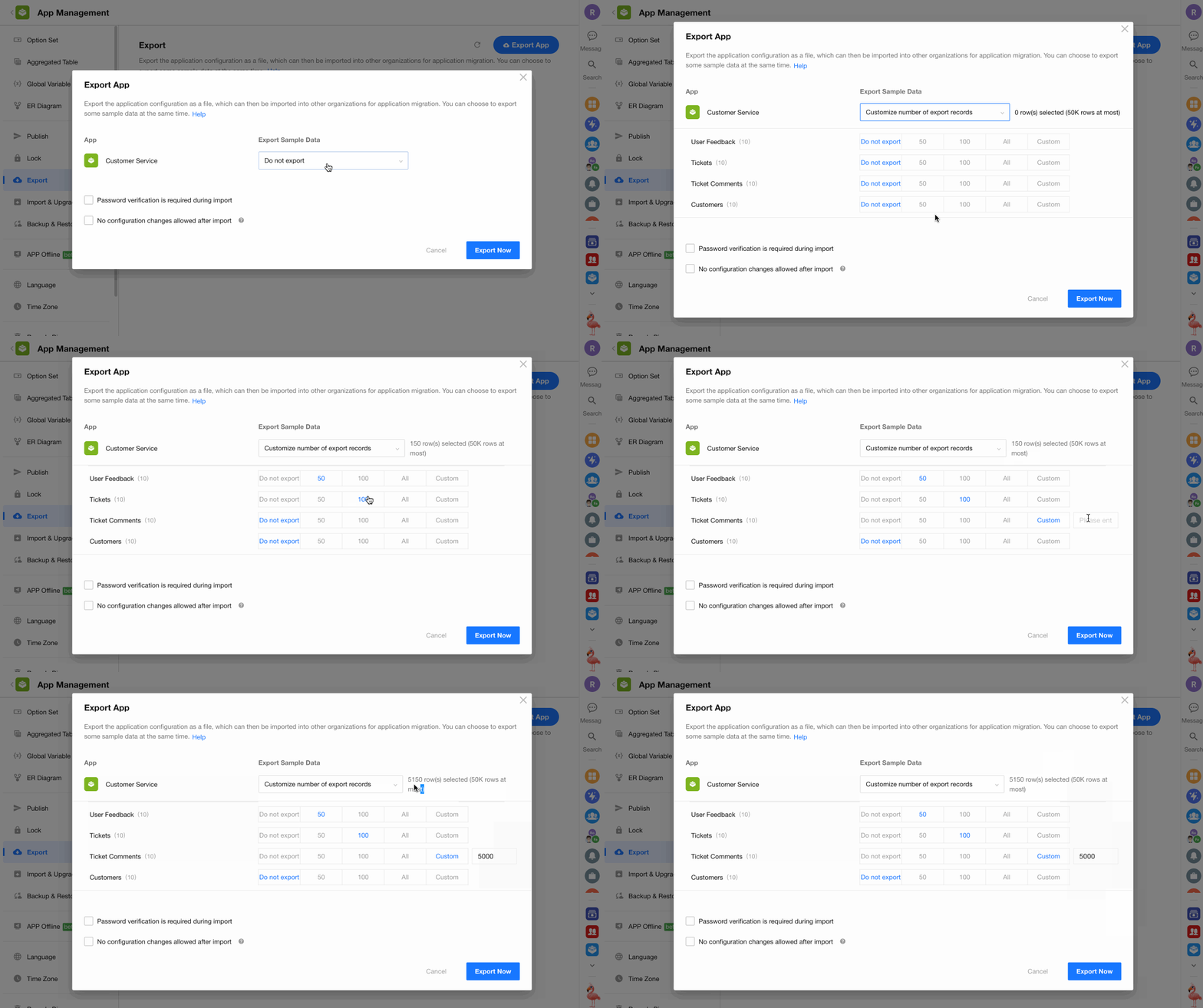
Export options:
-
Export up to 10,000 records per worksheet
The system evenly distributes the export quota across all worksheets in the selected applications. In this mode, the maximum number of records exported from each worksheet is calculated as:
100,000 ÷ Total number of worksheets in all selected applications
The total worksheet count includes all worksheets in all applications included in this export.
-
Customize the number of records to export
You can specify the number of records to export for each worksheet individually instead of using an even allocation. Any value greater than 10,000 is automatically capped at 10,000.
Configure Export Security Options
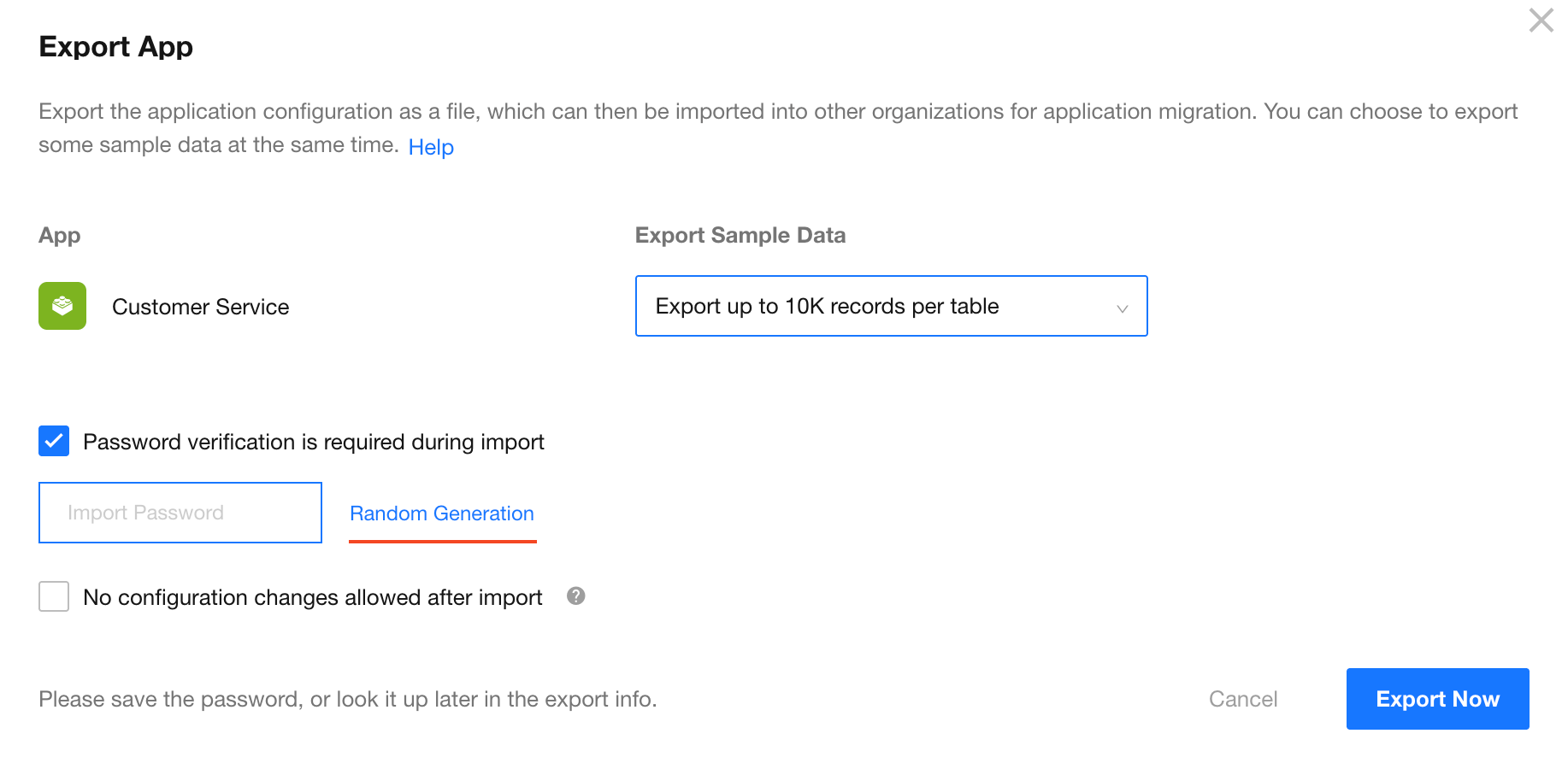
When exporting an application, you can configure an import password or lock the application configuration.
Import Password
Protects the exported .mdy file. After a password is configured, users must enter it before importing the file.
You can either generate a random password or specify one manually.
Lock Application Configuration
Select No configuration changes allowed after import to make the imported application locked by default. While locked, no user can view or modify the application configuration.
To unlock the application, users must enter the unlock password. The password can be generated automatically or entered manually.
If you forget either the import password or the unlock password, you can view it from the application export history.
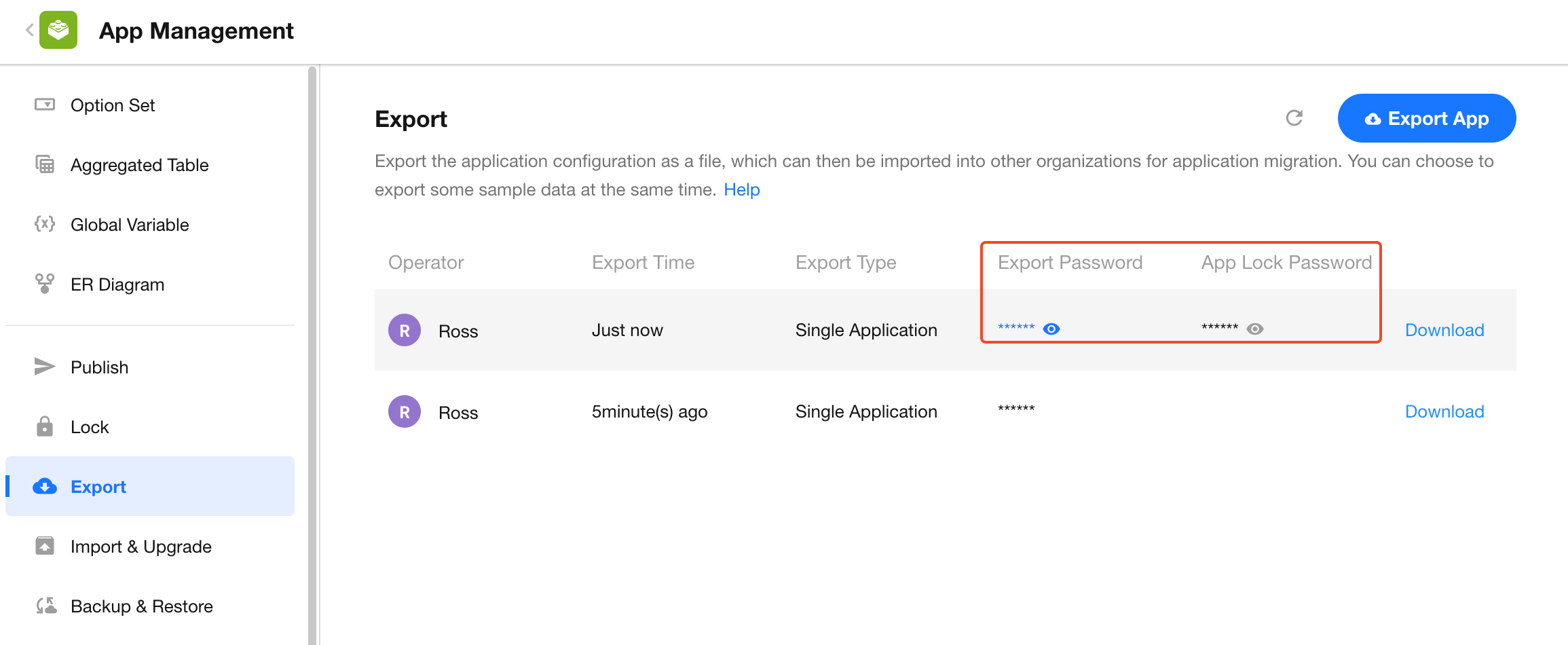
Download the Exported File
Application export is typically completed within 10 seconds. Once the export finishes, you'll receive a notification. Click Download Now to download the .mdy file.
Export Contents
What Is Included
When an application is exported, HAP packages its structure and configuration into a .mdy file. Record data can be included optionally.
| Category | Included Content |
|---|---|
| Application Structure | Basic application information (name, icon, theme color), group layout, application settings, sorting configuration, and worksheet group visibility settings |
| Worksheet Structure | Field definitions, field settings, views, filters, buttons, business rules, worksheet aliases, and row-level indexes |
| Roles and Permissions | Permission settings for all application roles |
| Workflows | Application workflows. You can choose to export all workflows or only selected ones. Related workflow plug-in configurations are also included. |
| Charts | Charts, reports, and custom pages |
| External Portal | Portal settings, user customization, and passwordless authentication settings |
| Aggregated Tables | Included in standard export, migration, and upgrade; excluded when publishing to the Market or App Library |
| Integration Center APIs | Integration Center API bindings associated with the application |
| Global Variables | Global variables referenced by the application |
| Application Languages | Application-level multilingual resources |
| External Links | External links configured in the application |
| Print Templates | Worksheet print templates |
| Custom Icons | Custom icon files used by the application or application groups |
| Excel Export Presets | Preset configurations for exporting worksheet records to Excel |
| User, Department, and Position Mapping | User, department, and position ID mappings used for matching during import |
Application export includes the application configuration and optional record data. The following content is not exported or requires additional configuration after import:
- Record data: Not exported by default. Select this option manually during export if needed.
- Aggregated tables: Included in standard export, migration, and upgrade scenarios, but excluded from Market and App Library packages.
- Attachments uploaded to records and print template files: Only file references or URLs are included. Binary files are not packaged.
- Locked applications purchased from the Market: These cannot be exported.
During import, some environment-specific settings may need to be reviewed or reconfigured, such as user mapping, external system authorization, API credentials, and attachment access. Follow the prompts on the import page.
Export Limitations
- A maximum of 10,000 records can be exported from a single worksheet and 50,000 records from a single application.
- When importing an application from HAP SaaS into HAP Server, or between different HAP Server environments, files in file fields and print template files must be uploaded again.
Application export is intended for exporting application configuration and a subset of data. Relationships between exported records may not be fully preserved.
To migrate all data while maintaining complete data integrity, use Data Synchronization or contact your consultant for data migration services.
Applications That Cannot Be Exported
The following applications cannot be exported. In these cases, the Export button is not displayed.
- Applications distributed through the Application Distribution Platform.
- Applications installed from the Market.
- Locked applications. Unlock the application before exporting.
Relationship Handling
If the exported application contains relationship fields linked to applications that are not included in the export, those relationship fields are automatically converted to text fields after import, and the original relationships are removed.
To preserve relationships between multiple applications, export the related applications together.
Import an Application
Application packages can be imported either as new applications or used to upgrade an existing application from the same source.
Create a New Application
-
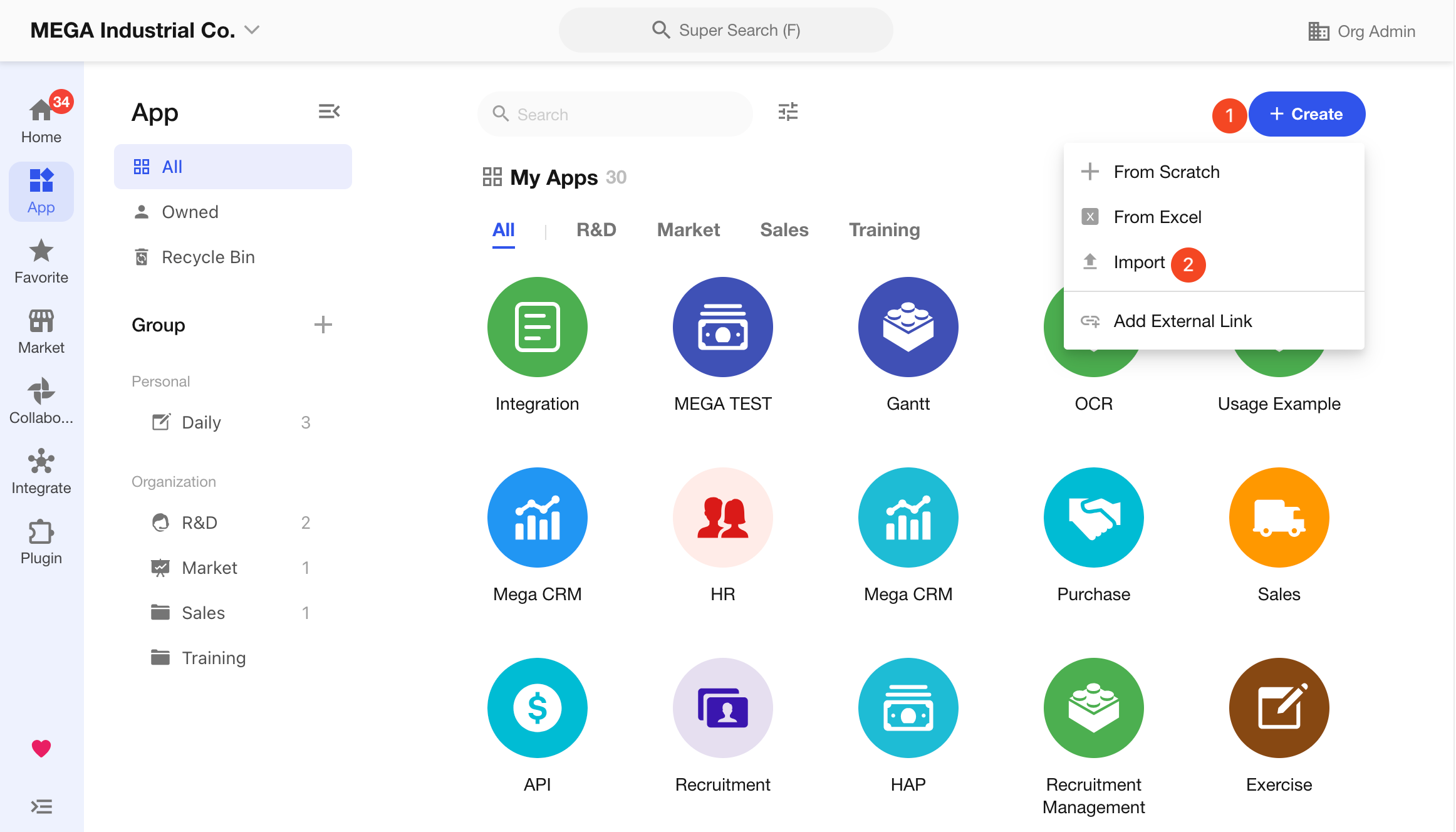
Import from the Home Page
When creating a new application from the Home page, you can import one application package at a time.
-
Import from the Organization Admin Console
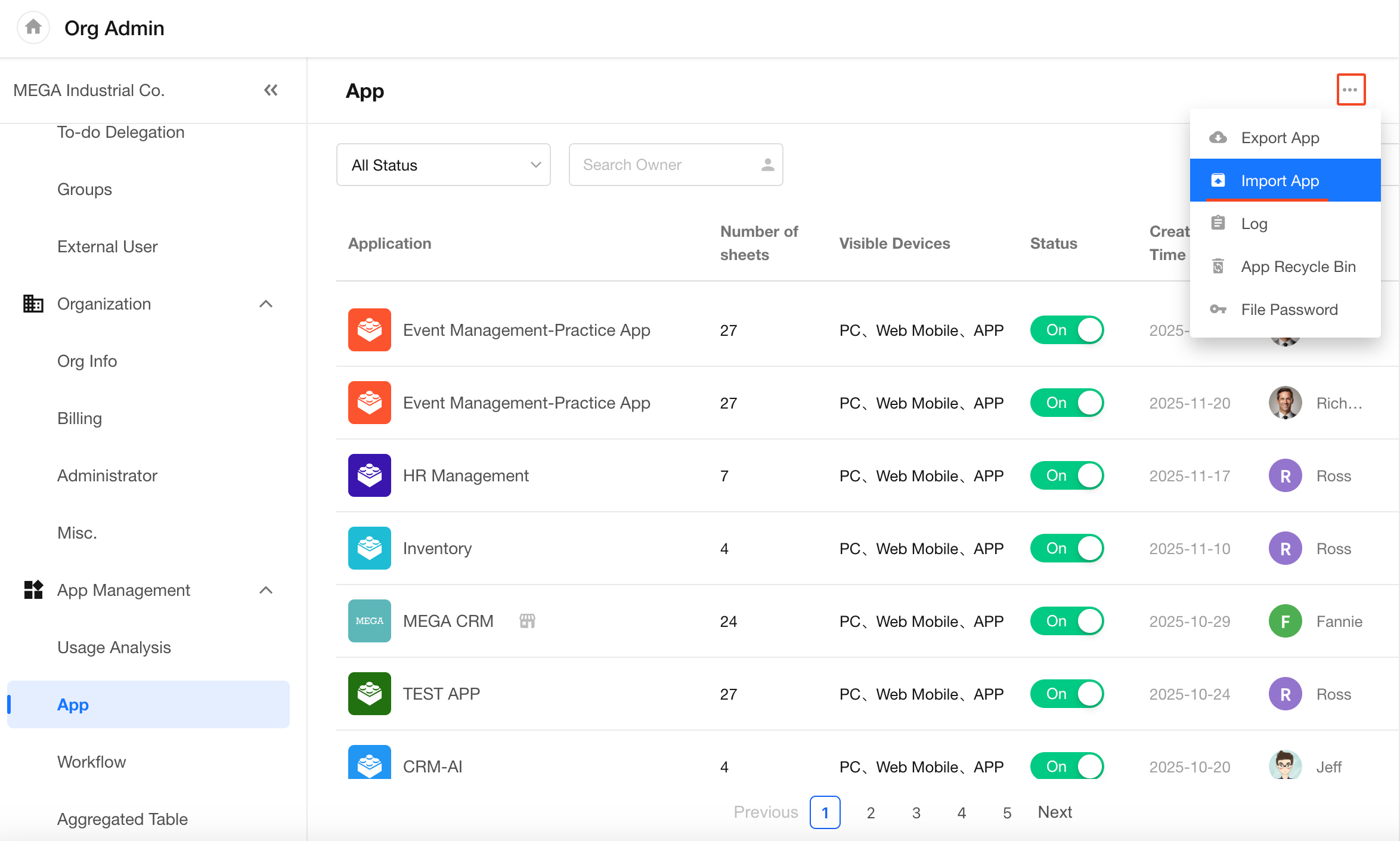
As an organization administrator, go to Org Admin > App Management > App, click the More menu in the upper-right corner, and select Import App.
From the Organization Admin console, you can import multiple application packages at once and choose to create them as new applications.
Upgrade an Existing Application
When importing from the Organization Admin console, you can also upgrade an existing application from the same source.
For details, see Upgrade Applications.
User and Department Matching Rules
During import, you can automatically match users, departments, positions, and organization roles in the target organization based on the information in the imported package.
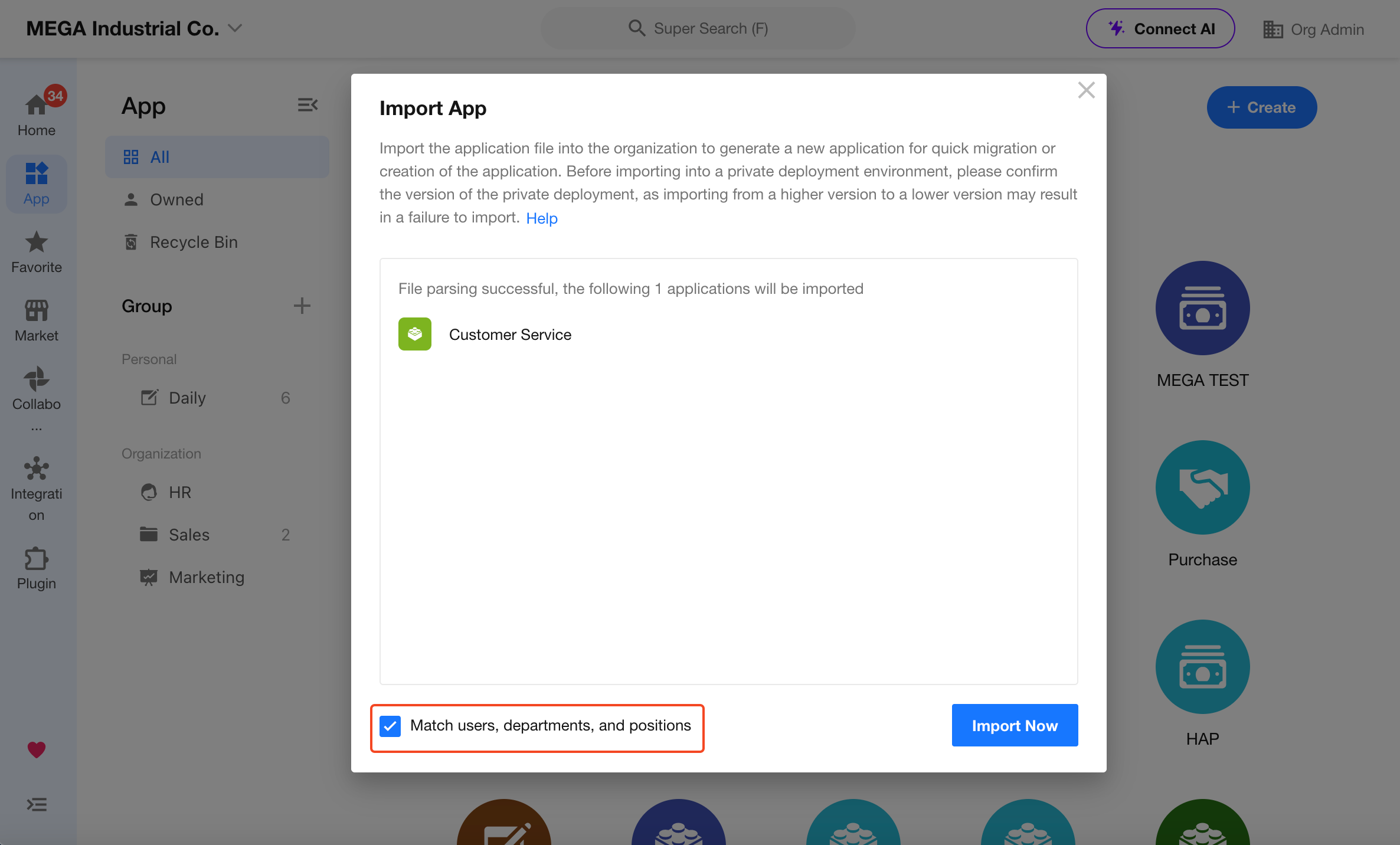
User matching rules
-
Match by User ID whenever possible.
-
If both a mobile number and email address are available in the imported data, both must match for the user to be considered the same user.
-
If only a mobile number is available, match by mobile number.
-
If only an email address is available, match by email address.
Department, Position, and Organization Role matching rules
-
Match by ID whenever possible.
-
If no matching ID is found, match by name. Departments are matched using their full path.
Was this document helpful?