Record Search/Filter/Sort/Statistics
Search
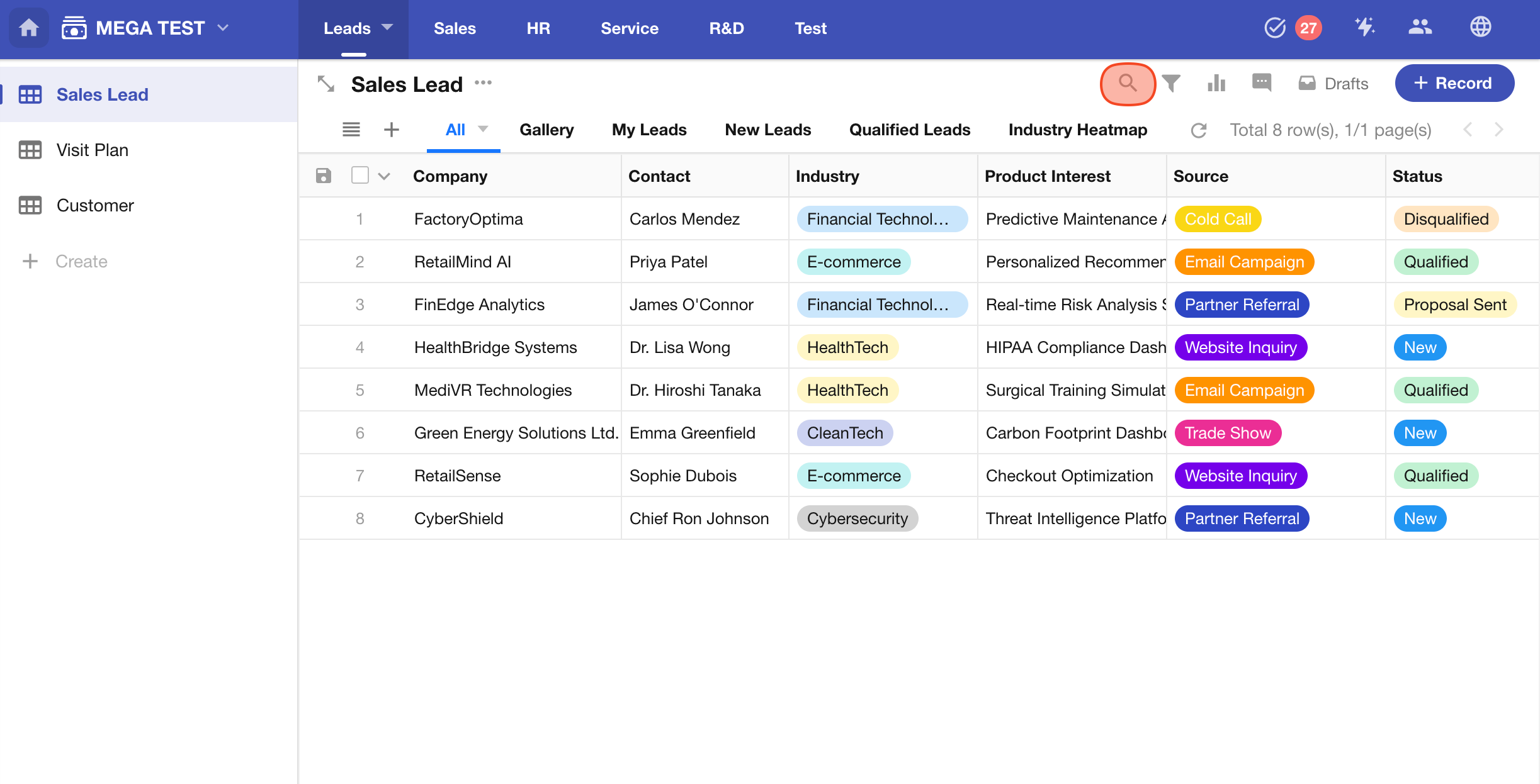
Search is the most commonly used method to locate records. Enter keywords to view the list of matching records.
Supported Field Types for Search
- Text, Telephone, Email, ID Number, Concat, Autonumber, AIP Query, Cascading Select, Relationship (single record), Foreign Field (data storage)
-
For Cascading Select, Relationship (single record), and Foreign Field (data storage), the related field in the linked worksheet must be one of the following six types: Text, Telephone, Email, ID Number, Concat, or Autonumber.
-
Text fields with over 5,000 characters are not searchable.
How to Search Records
-
Type a keyword in the search box and press
Enterto view the results. -
If your keyword contains English letters, click the
Aaicon to toggle case sensitivity. -
You can enter multiple keywords (separated by spaces).
The system uses AND logic, meaning only records that match all keywords will be returned.
A maximum of 5 keywords is supported — if more are entered, only the first 5 will be used.
Filter
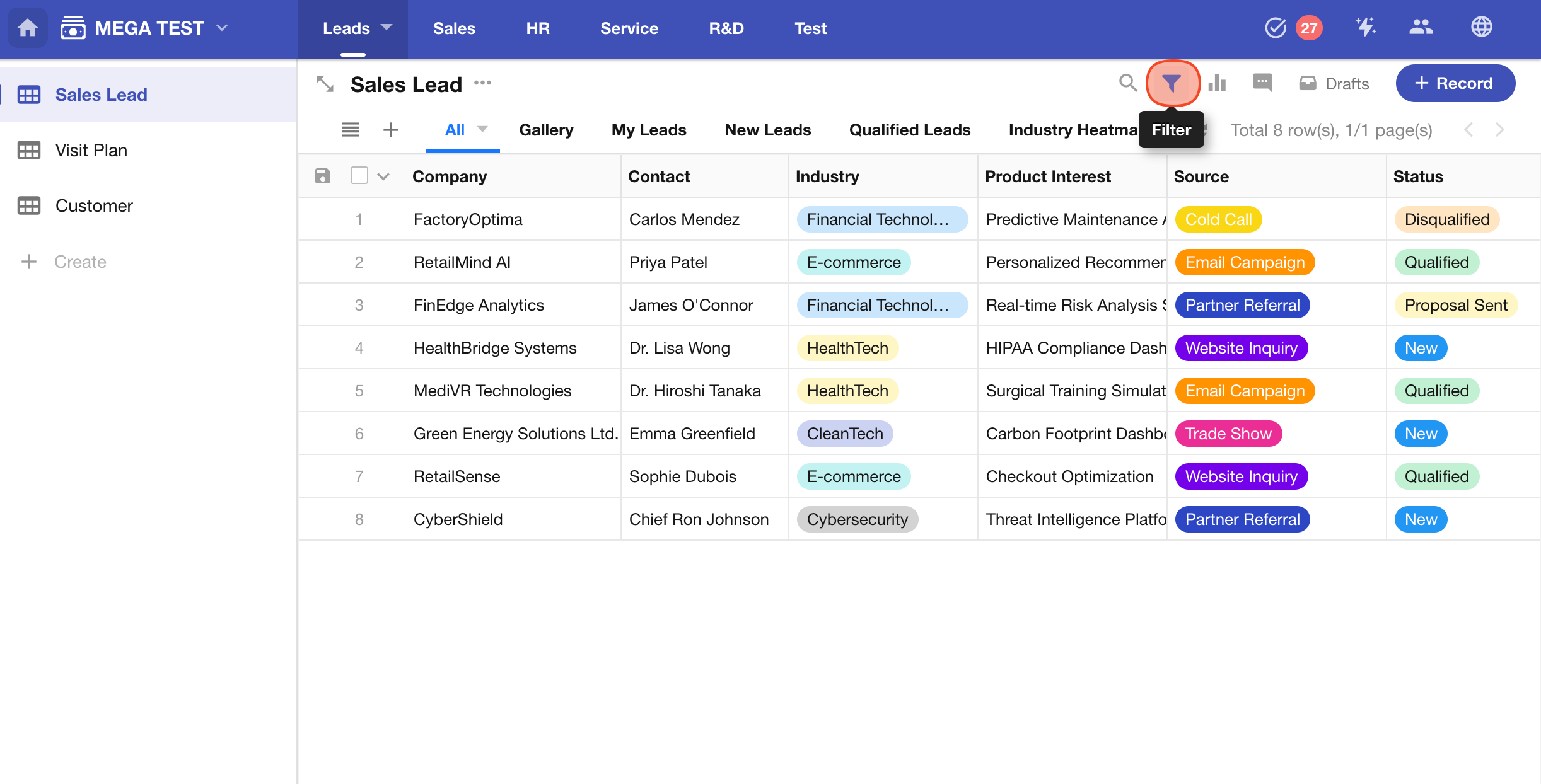
Each user can create their custom filters and save them for easy use next time.
Filtering records is based on records visible to the operator in the current view.
Create a Filter
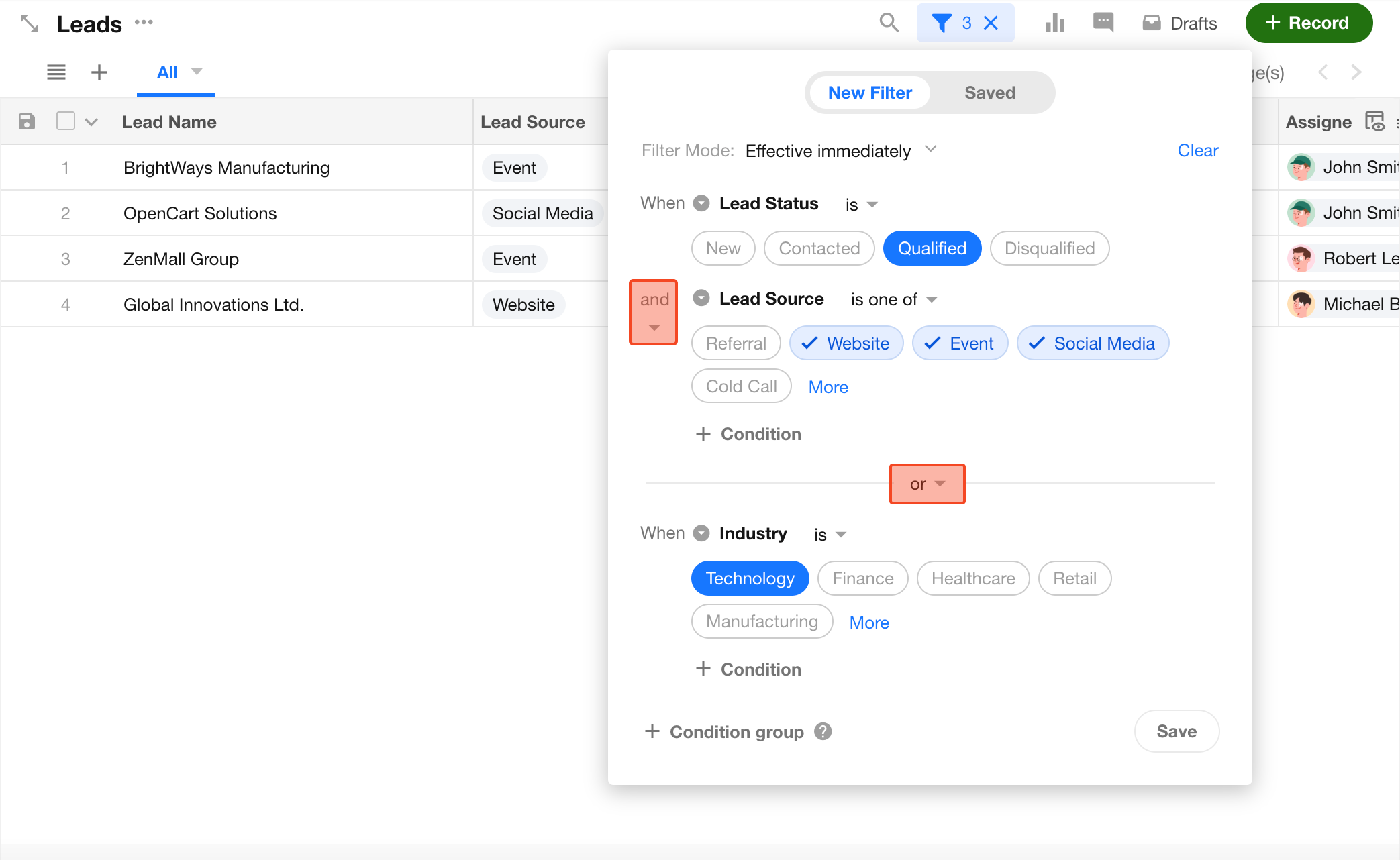
1. Click + Add Filter / + Condition Group
Select a filter field and set the desired conditions to configure your filter.
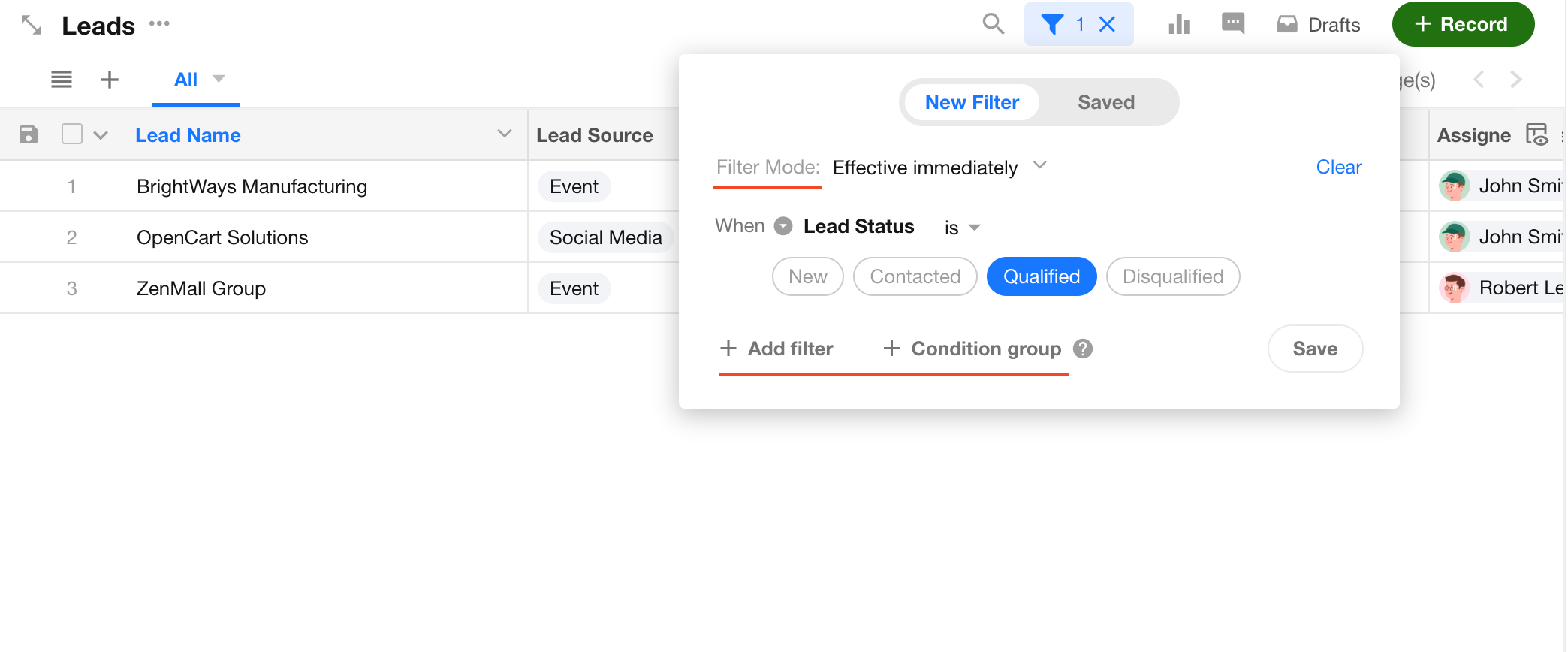
2. Add additional filter fields and define logic between conditions (AND/OR)
Within the same condition group, you can use AND or OR logic.
To combine both AND and OR, add multiple condition groups.
Learn more about filtering different field types
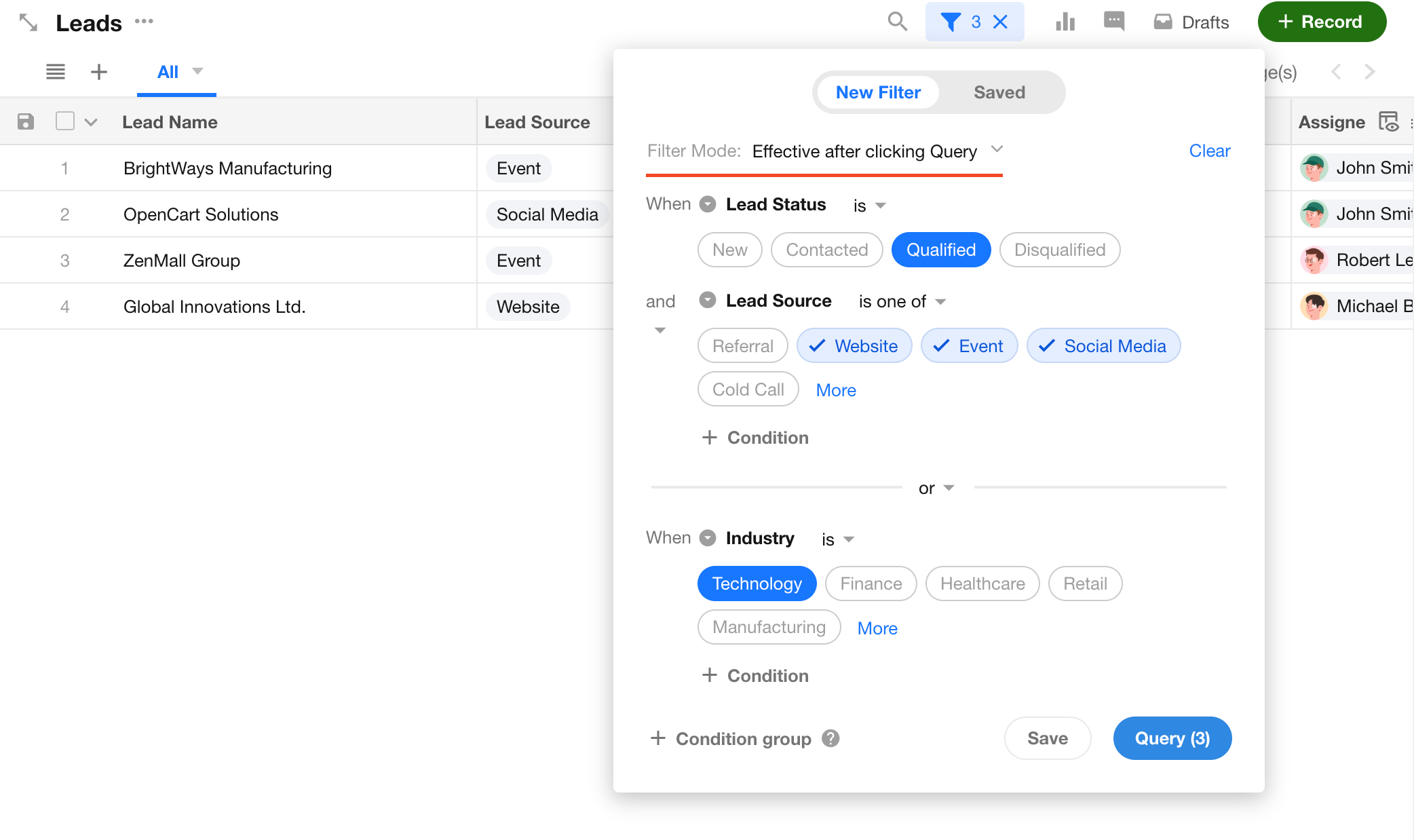
3. Filter Modes
You can choose between two filter modes: Effective immediately or Effective after clicking Query.
- Effective immediately: The filter updates results immediately after any condition changes.
- Effective after clicking Query: Records are filtered only after clicking the Query button.
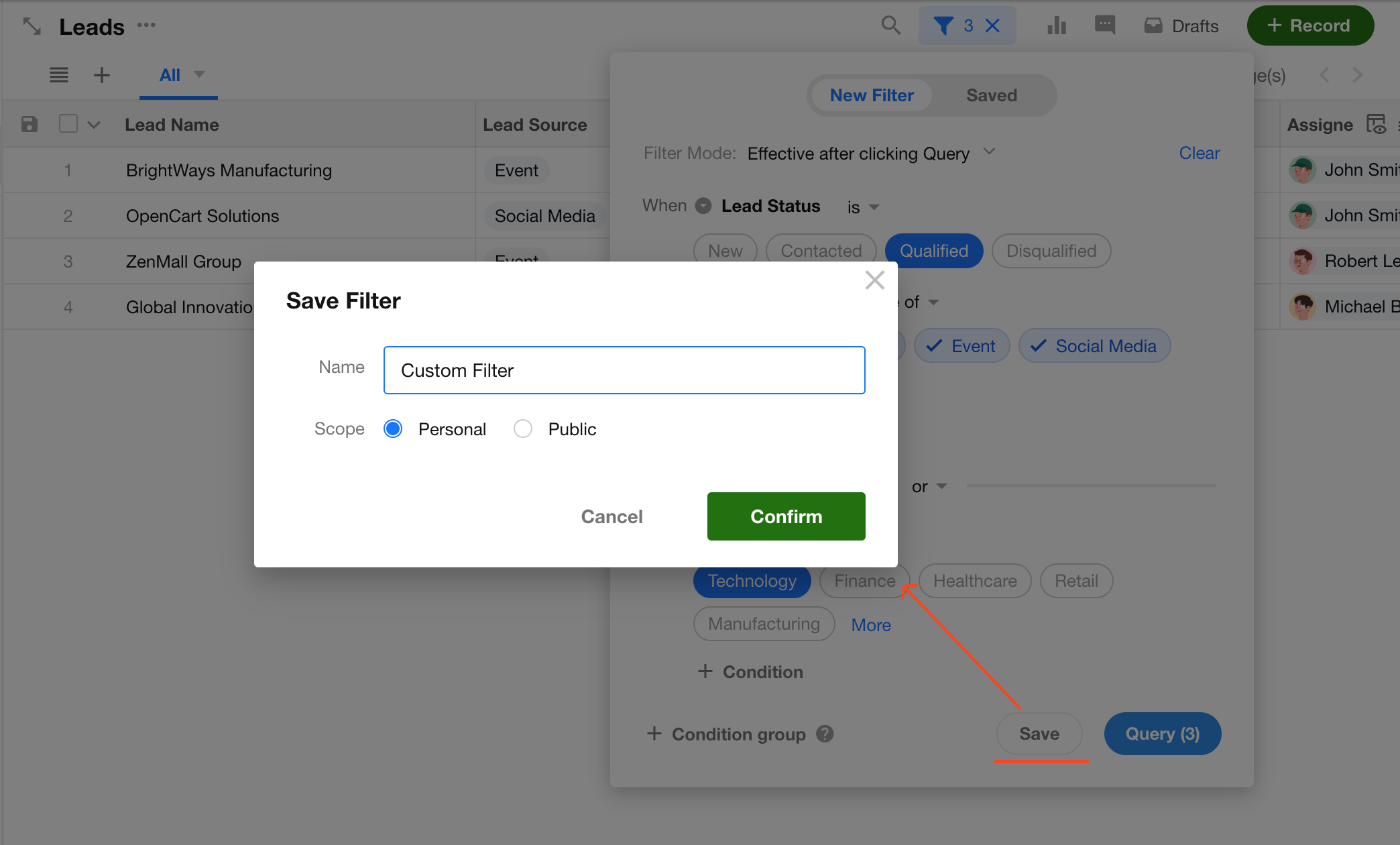
4. Save the Filter
-
Set a name for the filter.
-
Define the visibility scope: Personal or Public
-
Public Filter: Created by application administrators and accessible to all application members. Public filters can be edited, renamed, or converted to personal filters (after which they are only visible to the creator).
-
Personal Filter: Can be created by any application member and is only visible to the creator. Only application administrators can convert their own personal filters into public ones.
-
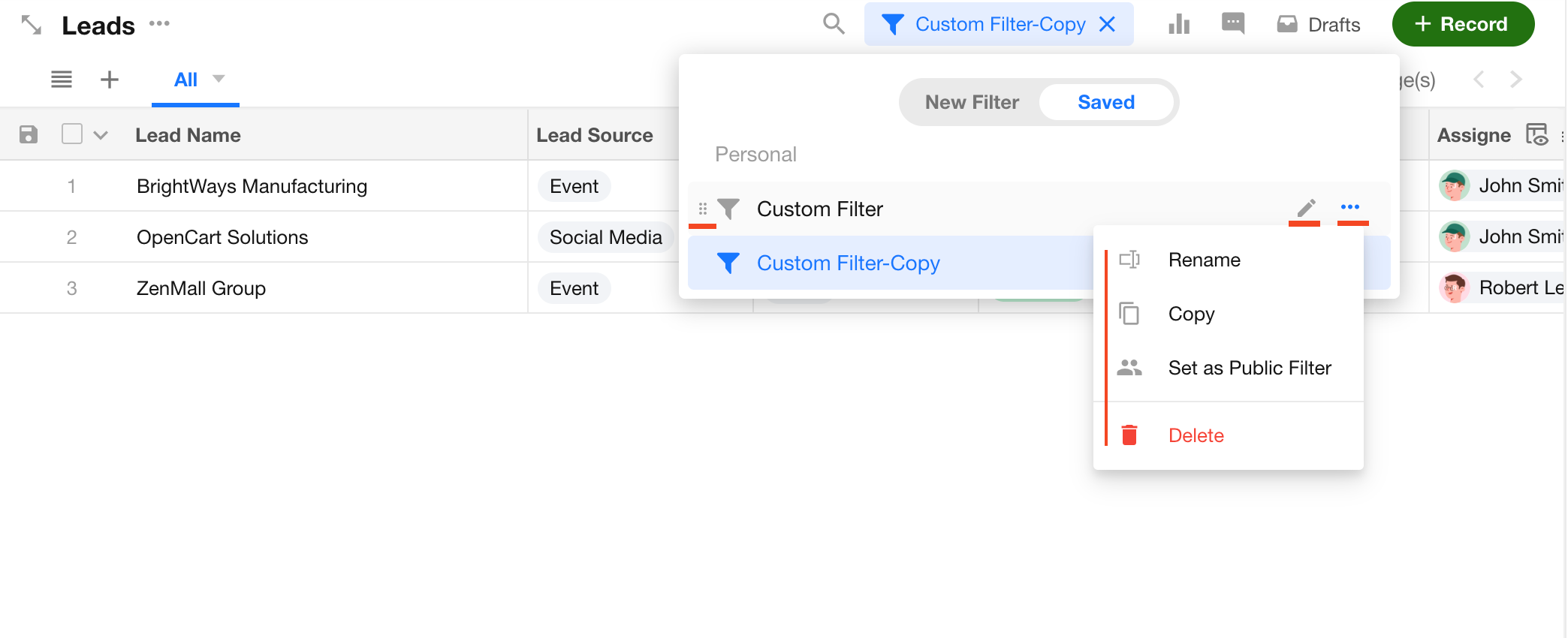
Filter Actions
For saved filters, you can perform the following operations: delete, rename, modify, duplicate, or reorder.
Sort
Temporary sorting of records is only supported in table view.
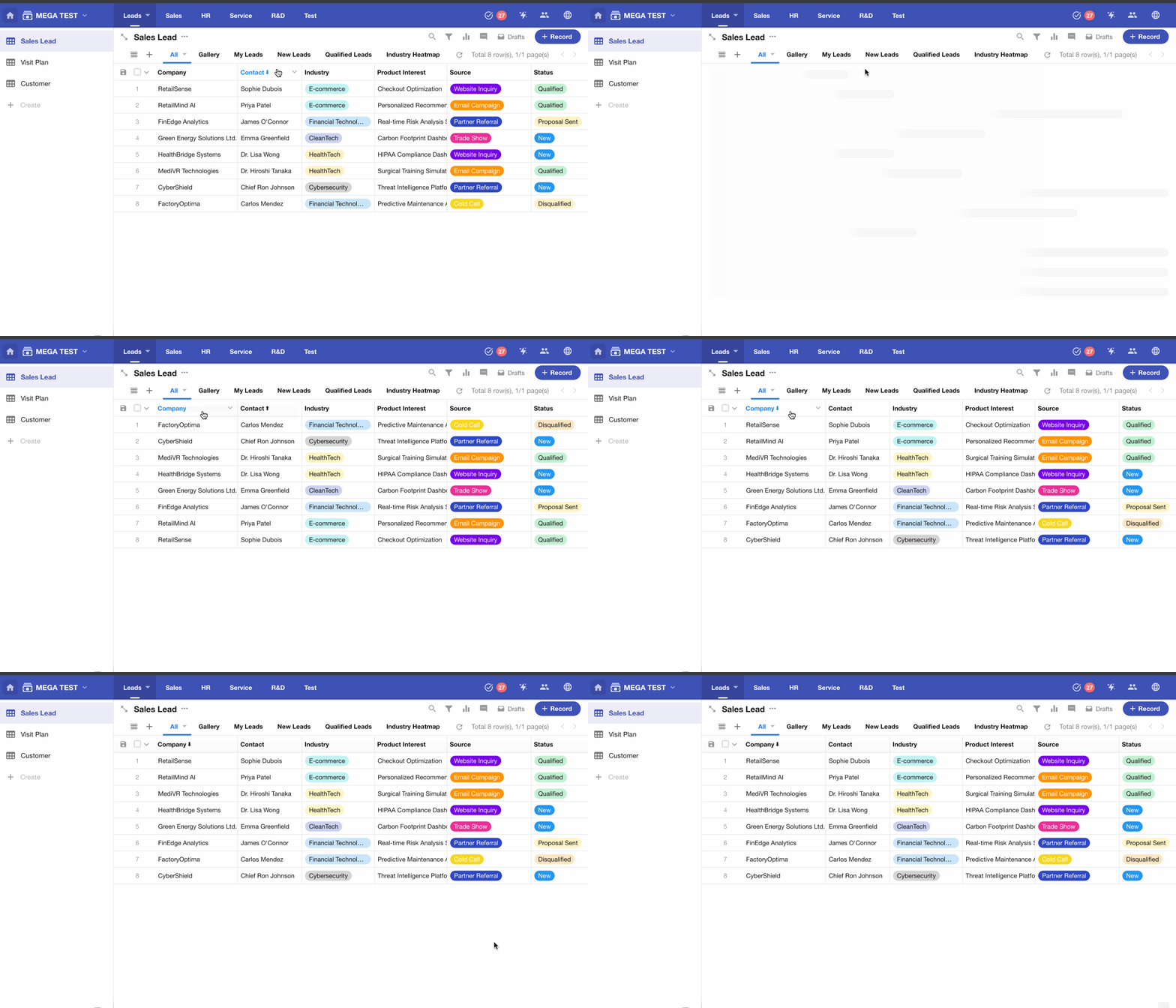
Click the column name (field) to sort by that column’s content, and click again to reverse the sort. Sorting will be reset upon page refresh.
Statistics
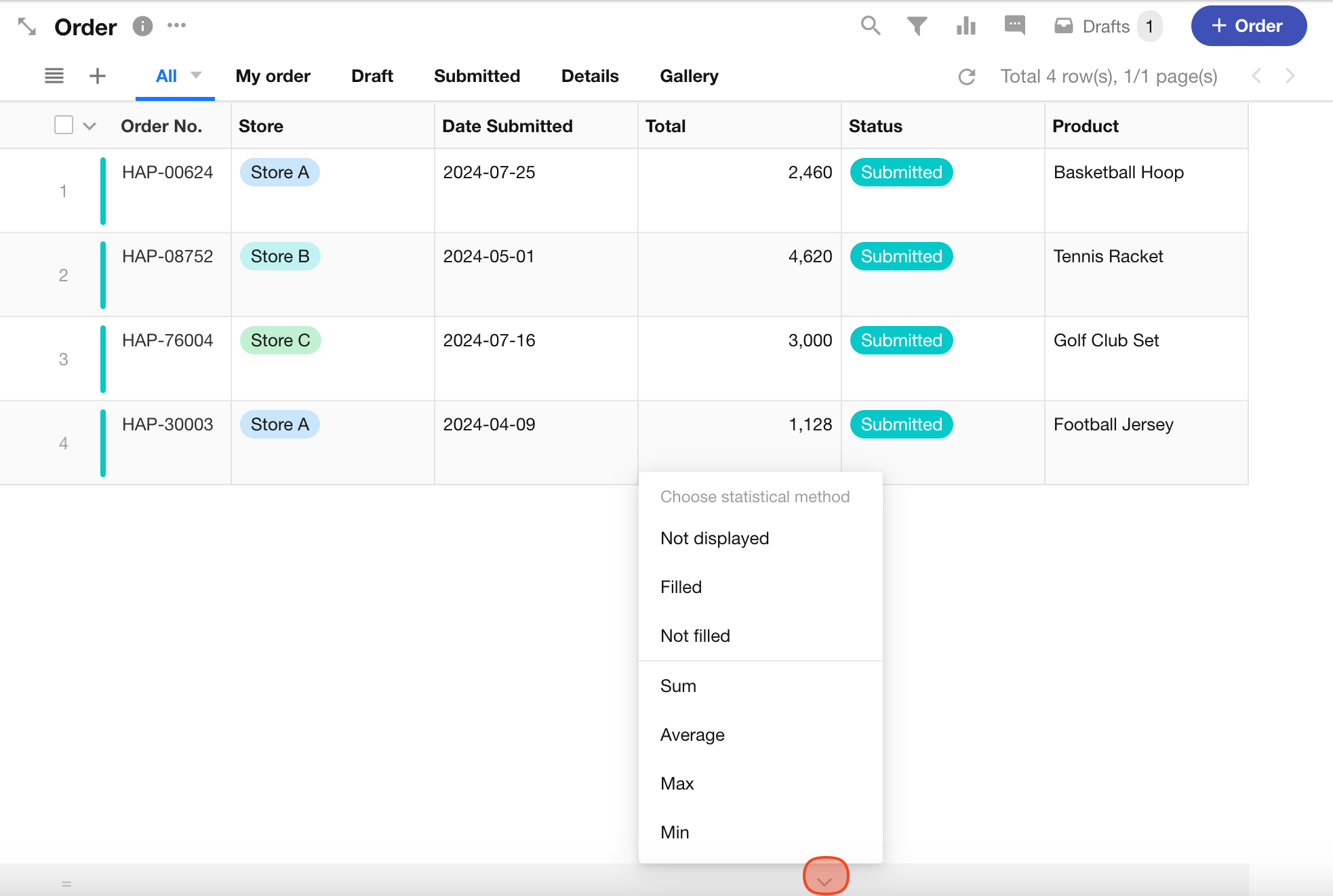
Statistics can be generated on columns (fields) of visible records in the current view. The statistics method will be remembered and remain unchanged after a refresh.
For Number and Currency fields: Sum, average, maximum value, etc.
For other field types: Number of records with data entered, number of records with no data.
Statistics are only supported in table view; other views do not support statistics.